
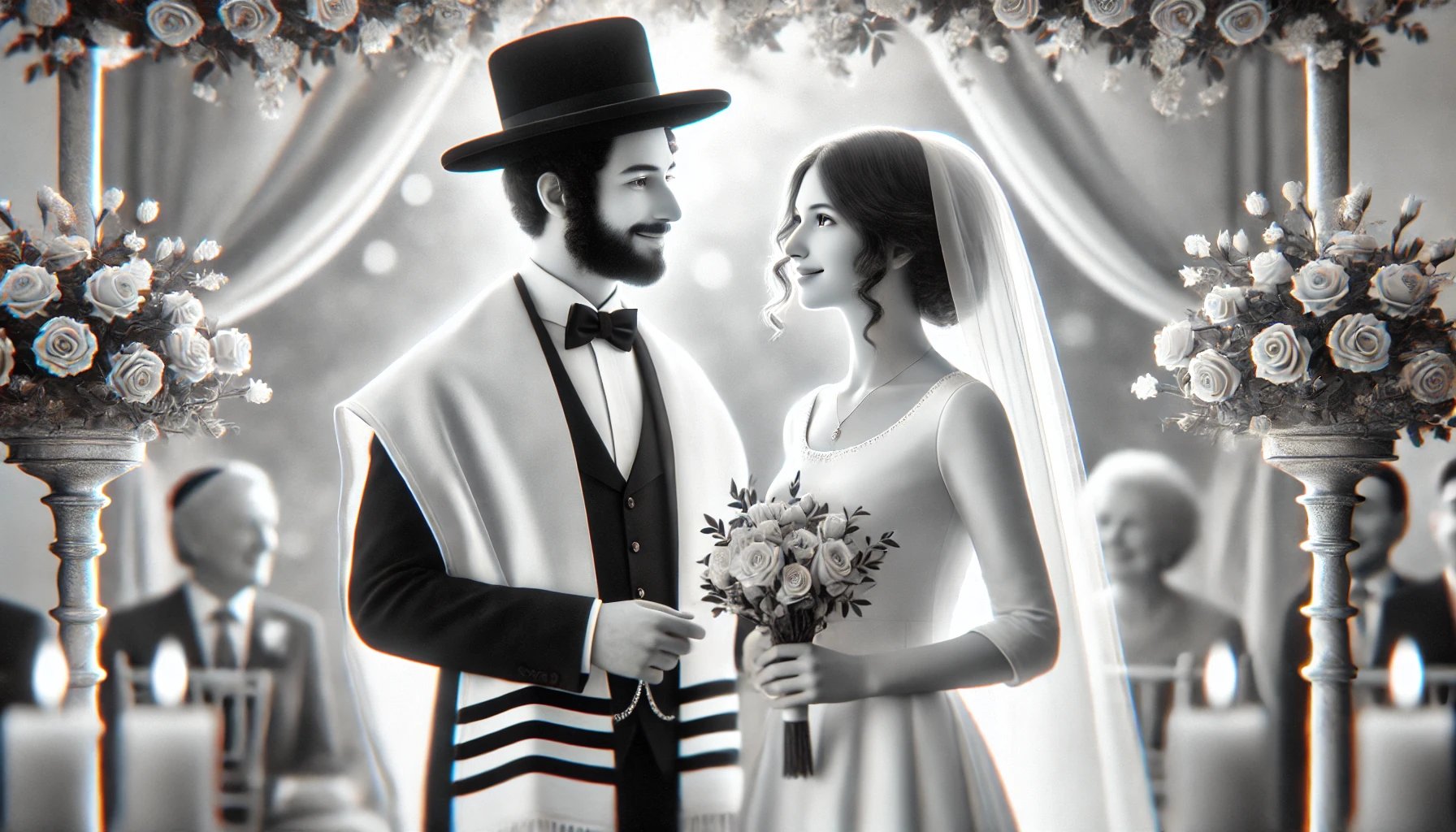
A Jewish wedding can bring family traditions, religious meaning, and a couple's personal choices together. The ceremony is not identical in every community, but several customs appear often. Knowing what they signify can make the celebration more meaningful, whether you are planning a wedding or simply attending one.
What does the chuppah represent?
The chuppah is the canopy under which many Jewish wedding ceremonies take place. It is commonly associated with the home that the couple will create together. Its appearance can be simple or elaborate; the symbolism matters more than one particular design. For a fuller explanation, see My Jewish Learning's guide to the chuppah.
What is a ketubah?
The ketubah is a Jewish marriage document traditionally setting out obligations connected with marriage. Its wording, signing, and role vary according to the community and type of ceremony. Some couples display the decorated document in their home after the wedding. The details are best understood in the context of the ceremony they have chosen.
Why are there blessings and a ring ceremony?
Traditional Jewish wedding liturgy includes stages known as erusin and nissuin. A ring is commonly part of the marriage ceremony. The sheva brachot, or seven blessings, celebrate themes of joy, companionship, and the couple's future together. The order and participation can differ among communities. Jewish Weddings 101 explains these elements in context.
Why is a glass broken?
At many Jewish weddings, the ceremony ends with a glass being broken. One widely taught explanation connects the moment of celebration with remembrance of the destruction of the Temple in Jerusalem; other interpretations also exist. The practice and who breaks the glass can vary. See the background to breaking the glass.
Do all Jewish couples follow the same customs?
No. People differ in observance, community tradition, language, and the ways they include relatives and friends. Some customs are important to one couple but unfamiliar to another. Asking what each tradition means to your partner is more helpful than assuming that a shared Jewish identity requires an identical ceremony.
Before the wedding comes the relationship
Marriage plans also involve ordinary conversations: how to share responsibilities, where to live, and which traditions to bring into a future home. If you hope to marry and are still meeting people, our tips for Jewish dating with marriage in mind offer a place to begin. The meaningful part of a wedding is the commitment two people choose to make, not a checklist of rituals. If you are still looking for that person, explore Jewish dating for marriage and begin by getting to know someone.
Leave a Comment